
A central heating boiler is the core component of a heating system in a building. The boiler heats the water in the system, which then warms up the radiator or underfloor heating, radiating heat into the various rooms of the property. Would you like to learn more about how it works or about the different components of a boiler? In this blog, we explain how a central heating boiler operates.
How a central heating boiler works
In a heating system, water is heated using a central heating boiler. Most boilers operate on natural gas, which serves as the fuel for the burner inside the heat exchanger. Pipes (or coils) run around the burner, through which the water of the heating system flows. As the burner emits heat by burning natural gas, the water is heated. This heated water is then transported through a network of pipes to the radiators or underfloor heating. The circulation pump ensures that the water continuously flows through the heating system. The radiators emit heat into the rooms, and as a result, the water cools down. The pump then returns the cooled water to the boiler, where it is reheated, continuing the cycle.
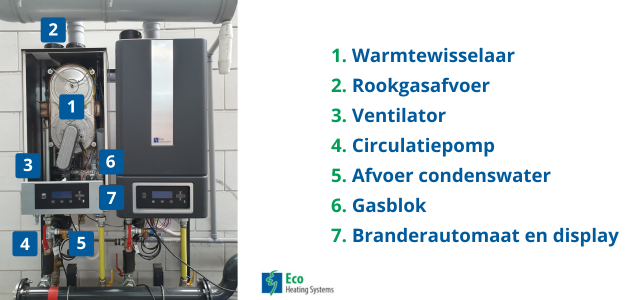
1. The heat exchanger
In the heat exchanger, the water is heated. You could say that the heat exchanger is the engine of the heating system in a building. The heat exchanger operates on gas. With a spark from the electric ignition pin, the boiler switches on, and the burner is activated. Around the burner, coils (pipes or loops) filled with water circulate and get heated. The heated water is then transported to the radiators, where it releases its heat into the different rooms. For more information about the heat exchanger, read our blog on the
2. Flue gas exhaust
The combustion of gas inside the exchanger produces flue gases that must be vented out. In a single (mono) heat exchanger, the flue gases are transported directly outside. In a condensing (duo) boiler, the flue gases are condensed to provide an additional heating stage. In most cases, a concentric discharge pipe is used for the flue gas exhaust. This is a double-walled pipe where the inner pipe exhausts the flue gases, while clean air flows inward through the outer pipe. In the event of a leak, the contaminated gas leaks into the outer tube and is safely discharged, preventing harmful substances from entering the building.
3. Fan
The fan ensures the supply of air into the combustion chamber so that the natural gas can burn efficiently. It also helps to push the flue gases produced after combustion towards the exhaust system.
4. Circulation pump
The circulation pump ensures that the water in the heating system is in motion. When the boiler is activated, the pump also starts working. The circulation pump pumps the hot water from the heat exchanger to the radiators and then returns it to the boiler.
5. drainage system
In a high-efficiency boiler (HR boiler), the flue gas released during combustion is reused to heat the water. The flue gas mainly consists of water vapor, which is condensed, causing the droplets to become hot. After these droplets have released their heat, the water is drained away into the sewage system. This condensate flows through the drainage system.
6. Gas valve
The gas valve is connected to the natural gas and air supply within the unit. It ensures the correct amount of gas is delivered to the burner head for optimal combustion. The gas valve also regulates the proper gas pressure. It is important that the settings are checked during every maintenance service. Proper adjustment of the gas valve optimizes combustion, resulting in the highest efficiency of the central heating boiler.
7. Burner control unit
The burner control unit is the computer of the central heating boiler. It is connected to the thermostat and measures various parameters, such as the water temperature. The display shows various information, such as the water pressure, water temperature, boiler history, and details about any malfunctions.

How does a high efficiency heat boiler works
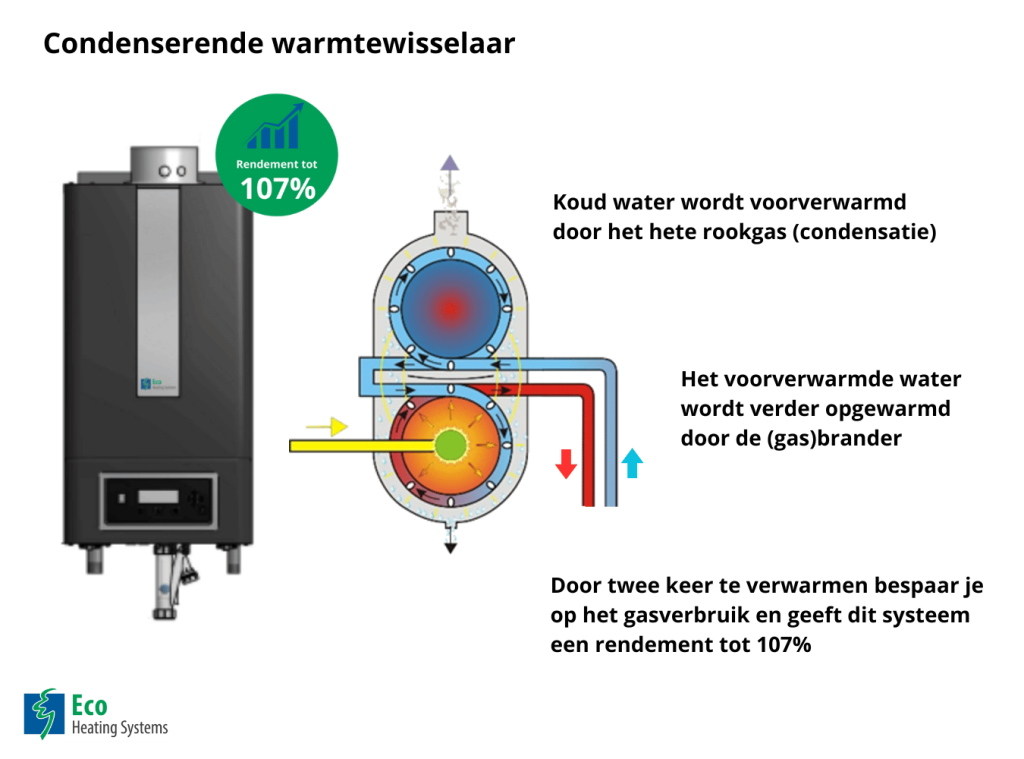
A high-efficiency boiler warms the water in a heating system in a sustainable manner by utilizing two distinct heating stages: directly via the burner where natural gas is combusted, and via condensation. The flue gases released during combustion are captured and condensed, creating hot water droplets. The cooled water returning to the boiler from a radiator first passes by these hot droplets, preheating the water. Consequently, the burner requires less energy to bring the water up to the correct temperature. This creates an efficiency rate of over 100%, meaning more energy is generated than consumed. Eco Heating Systems' boilers achieve an efficiency rate of up to 107%. Read more about our high-efficiency central heating boilers.
Maintenance
Maintaining a central heating boiler or a domestic hot water boiler extends its service life and reduces breakdowns. It is a critical task that is frequently underestimated. The combustion of natural gas inside the heat exchanger causes deposits to form on the coils through which the water flows, and releases combustion particles. Regularly cleaning the heat exchanger prevents malfunctions and ensures that the boiler continues to perform optimally and sustainably. In addition, the boiler must be inspected for leaks, wear and tear, proper flue gas discharge, and correct water pressure during every service. Read more about boiler maintenance in our blog or watch our video on central heating boiler maintenance.
Contact
Would you like to know more about central heating boilers, domestic hot water boilers, maintenance, or other heating products for your building? Or are you interested in the pros and cons of a central heating boiler? Then read our blog on the topic or contact us directly. We’re happy to help and can provide tailored advice. We’re here for you.


 Back to the overview