
Note: Heat Pumps are available for the Dutch market only. There are several types of heat pumps you can purchase for your building, sports facility, or apartment complex. All heat pumps have one thing in common: they operate on electricity. However, they generate the heat they provide in different ways. Would you like to learn more about the various types of heat pumps? In this blog, we will discuss the differences between the heat pumps available on the market.
Air-to-water heat pump
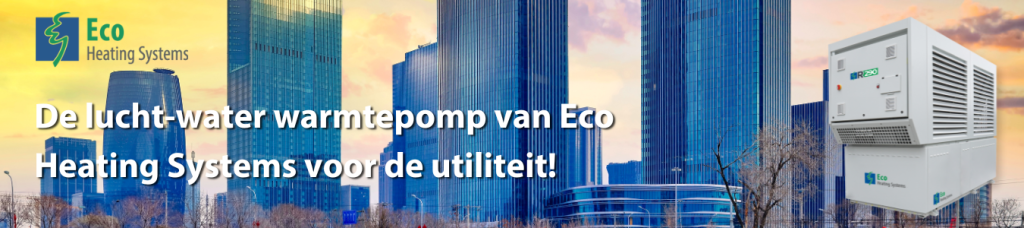
An air-to-water heat pump extracts heat from the outdoor air, which causes the refrigerant in the heat pump to evaporate and be converted into heat. The compressor further heats the evaporated refrigerant, allowing it to warm the water in the heating system. A major advantage of the air-to-water heat pump is that it can be easily installed in existing buildings. The unit is a monoblock heat pump that can be placed on the exterior of the building, while the pipes can be connected to the heating system inside. An air-to-water heat pump can also be linked to an existing gas-fired heating system to create a hybrid heating system. A disadvantage of an air-to-water heat pump is that it consumes more electricity during colder periods because the outdoor air is simply colder in winter. More energy is then required to heat the water in the heating system. If you want to know more about how the air-to-water heat pump works, please visit our comprehensive dedicated page.
Water-to-water heat pump
A water-to-water heat pump extracts heat from water pumped up from the ground. The temperature of the groundwater causes the refrigerant to evaporate and be converted into heat inside the heat pump. The main advantage of a water-to-water heat pump is that the groundwater used to generate heat remains at a stable temperature throughout the year. This allows the heat pump to produce heat in a highly energy-efficient manner. A disadvantage is that a water-to-water heat pump is more difficult to install in existing buildings. Drilling into the ground is required to pump up the groundwater. This makes the installation process more expensive, and in some cases, it cannot be carried out at all.
Ground-to-water heat pump
A ground-to-water heat pump extracts heat from the earth. With this system, a network of pipes is installed in the ground at a depth of approximately one and a half meters. This network can be placed either horizontally or vertically. The ground emits geothermal heat, which can be transported via the pipe network to the heat pump. Inside the heat pump, this heat is then converted into high-temperature heat using the refrigerant and the compressor. An advantage of the ground-to-water heat pump is that geothermal energy has a stable temperature, allowing the heat pump to generate heat optimally and with stable electricity consumption. A disadvantage is that the installation is expensive. It depends heavily on the specific situation of the existing building whether this system can be installed, which is why we primarily see this system applied in new construction projects.
Air-to-air heat pump
An air-to-air heat pump consists of an indoor and an outdoor unit. The outdoor unit uses fans to draw in air, which is converted into heat inside the device. This hot air is then blown into the room by the indoor unit. In the summer, this device can very easily be used as an air conditioner, blowing cold air into the warm room. An advantage is that this device is easy to install and the system is inexpensive. It is ideal for a space that needs to be heated or cooled independently of the existing heating system. A major disadvantage is that this system is less powerful and cannot be connected to the central heating system. In winter, you remain dependent on the existing heating system for the entire building and will need auxiliary heating.
Hybrid heat pump
In a hybrid heat pump system, the electric heat pump works in tandem with a gas-fired central heating boiler. The heat pump handles the largest portion of the heating, while the gas-fired boiler steps in during peak loads or extremely cold periods in winter. An air-to-water heat pump can easily be connected to the existing heating system. The advantage of a hybrid heat pump is that it allows you to easily make your building more sustainable. Because the heat pump works together with the existing heating system, a smaller heat pump unit can be sufficient. With a hybrid system, you can quickly save up to 75% on your gas consumption, allowing you to reduce your energy costs rapidly. A disadvantage of a hybrid heat pump is that you are still dependent on gas, meaning that if gas prices rise, your energy costs will directly increase as well.
Want to know more about the different types of heat pumps?
It is always a good idea to insulate the building where the heat pump will be installed. A heat pump performs best and is most energy-efficient when temperature fluctuations are minimal. Eco Heating Systems supplies air-to-water heat pumps for the commercial market that can be easily installed and integrated into your building. These devices are also ready to be deployed as part of a hybrid system. Would you like more information, or do you want to find out if our heat pumps are suitable for your situation? Please contact us. We can quickly and efficiently provide you with tailored advice. We look forward to your inquiry.


 Back to the overview